Getting Started with Your New Allotment Plot
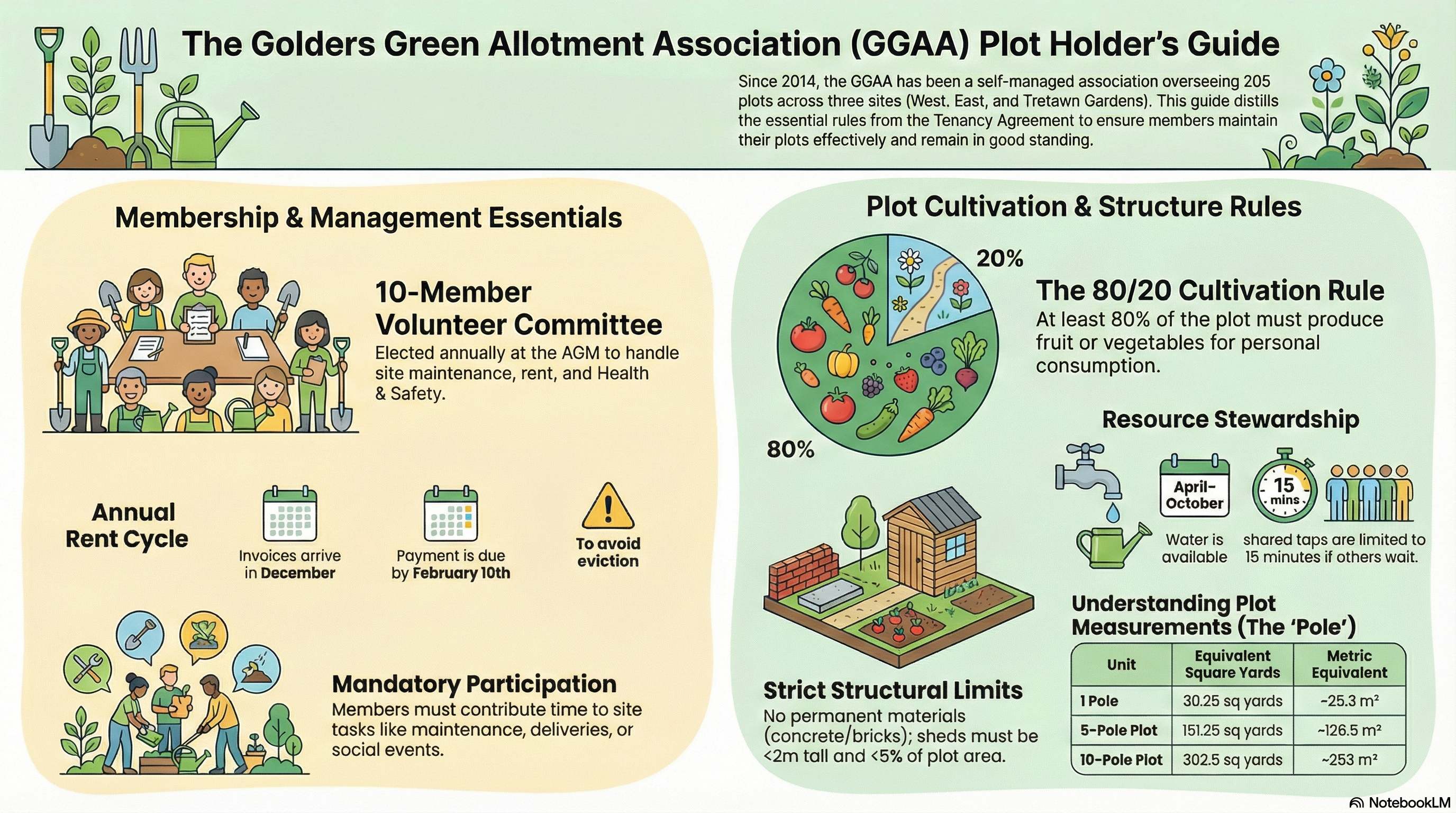
A warm welcome to new Golders Green Allotment Association plot holders
Taking on a new allotment plot is exciting, but it can also feel a bit daunting when you first unlock the gate and take it all in. An empty or overgrown plot can look like hard work waiting to happen. The truth is, every single experienced plot holder at Golders Green started exactly where you are now.
There's no rush, no expectation of perfection, and no single "right" way to garden. What matters is steady progress, a bit of patience, and enjoying the process along the way.
Start by getting to know your plot
Before you dig, plant, or buy anything, spend some time just being on your plot. Walk it, sit on it, and observe it. Notice where the sun hits in the morning and afternoon. See which areas stay wet after rain and which dry out quickly. These small observations will guide many decisions later on.
Don't be discouraged if your plot looks messy or neglected. Clearing a plot is a gradual job, and it's absolutely fine to tackle it in sections. Choose one manageable area, clear it properly, and get something growing there. That early sense of progress makes a huge difference.
Focus on soil before crops
Good allotment gardening starts with the soil. You don't need fancy products or quick fixes. What soil really wants is organic matter and time.
Adding compost, well-rotted manure, or mulched plant material improves structure, fertility, and moisture retention. If your soil is heavy, that's normal here. It will improve year by year as you work it gently and keep feeding it.
Try not to leave soil bare for long periods. If you're not ready to plant an area, covering it with cardboard and compost, or another breathable cover, will suppress weeds and protect the soil underneath.
Start small and grow what you actually eat
It's very tempting to plant a bit of everything, but this often leads to feeling overwhelmed. A much better approach is to grow a small number of reliable crops well.
Think about what you and your household genuinely enjoy eating. Potatoes, beans, salads, courgettes, onions, tomatoes, and herbs are all good starting points and tend to be forgiving for beginners.
Remember that allotments here are for growing fruit and vegetables for your own use and your family's use. Sharing surplus with neighbours is part of allotment culture, but growing for sale isn't allowed.
Water wisely and plan ahead
Water is available on site during the growing season, but it's a shared and valuable resource. Use it thoughtfully. Early morning or evening watering is far more effective than watering in the middle of the day.
Aim water at the base of plants rather than spraying everywhere. If others are waiting for a tap, keep your turn reasonable. Collecting rainwater in water butts is strongly encouraged and makes life much easier during dry spells.
Never leave hoses unattended, and always make sure taps are properly turned off before you leave.
Keep structures and paths sensible
It's natural to start imagining sheds, greenhouses, and seating areas straight away, but it's best to live with your plot for a while before committing. Any sheds, polytunnels, or greenhouses need permission and must meet size and placement guidelines.
Paths matter more than people often realise. Shared paths should be kept clear, level, and safe so everyone can access their plots easily. A wheelbarrow should be able to pass without trouble, and grass paths should be kept trimmed.
Weeds, wildlife, and everyday realities
Weeds are part of allotment life. The goal isn't to eliminate them completely, but to stop them taking over or going to seed. Regular short sessions are far easier than occasional big clear-ups.
Wildlife is also part of the site. Birds, insects, foxes, and hedgehogs all have their place. Rats are unfortunately present too, which is why keeping plots tidy, blocking gaps under sheds, and avoiding food waste is so important.
If you notice issues that could affect others, let the committee know sooner rather than later.
Be part of the community
One of the best things about gardening at Golders Green is the people. The Trading Hut isn't just a place to buy seeds and compost, it's where advice is shared and friendships start. Don't be shy about asking questions. Most plot holders are more than happy to help.
If illness, work, or family commitments mean you're struggling to keep up with your plot for a while, communication is key. Letting the committee know early is always better than saying nothing.
A final word
Allotments aren't about perfection. They're about learning, patience, and enjoyment. Some seasons will be brilliant, others less so. Crops will fail occasionally, weeds will get ahead of you, and plans will change.
If you're making a genuine effort, keeping your plot cultivated, respecting your neighbours, and enjoying being there, you're doing it right.
Welcome to Golders Green Allotment Association. Take it one step at a time and enjoy the journey.